
Why emerging technologies are heating up the steel market, and how Third Derivative’s startups are laying the blueprint for a resilient industry.
Additional Contributors: Sal Brzozowski, Ali Rotatori, Mackenzie Cool, Thanh Ha, Ana Sophia Mifsud
Steel, an alloy of iron and carbon, has shaped our physical world and global economies since its discovery over 3,000 years ago. Society’s dependence on this material’s unique blend of strength, durability, and conductivity has helped steel become a globally traded commodity and a $1.5 trillion business, producing around 1.8 billion metric tons of steel annually. That’s nearly 500 pounds, or a grizzly bear’s worth of steel, for every person on Earth per year. However, steel’s massive carbon footprint, contributing around 8 percent of global greenhouse gas emissions, and lack of viable alternatives, require rapidly constructing a new era for this centuries-old industry.
2026 will be a landmark year for the global steel industry. In Northern Sweden, the very first commercial volumes of near-zero emissions steel will be produced and sold. A new company called Stegra will formally enter the incumbent-dominated industry after raising $6.5 billion of private and public capital. With construction long underway, Stegra intends to bring 5 million metric tons of near-zero emissions steel products to a largely European customer base, many of whom are also investors in the company. They have secured premium-priced contracts based on the low emission intensity of their products and used that future guaranteed revenue to help derisk their capital. While Stegra has showcased both financial and technological innovation, they have also encountered fundraising hurdles and contracting challenges that leave it with about 40 percent of future production uncommitted. The company’s story illuminates both the scale of innovation needed for a net-zero steel sector and the difficulties with commercializing such innovations.
Stegra’s 5 million metric tons would have only accounted for roughly 0.03 percent of global steel production in 2024. Steel decarbonization will need to be global and multifaceted. Solutions will need to be geographically specific based on market conditions, raw materials, and energy prices. Demand for steel products is expected to grow significantly, especially in industrializing geographies with strong population growth like Southeast Asia, India, and Africa. By 2050, global demand could reach 2.5 billion metric tons, a 39 percent increase from today. Without meaningful intervention, emissions from the sector could rise at a similar rate.
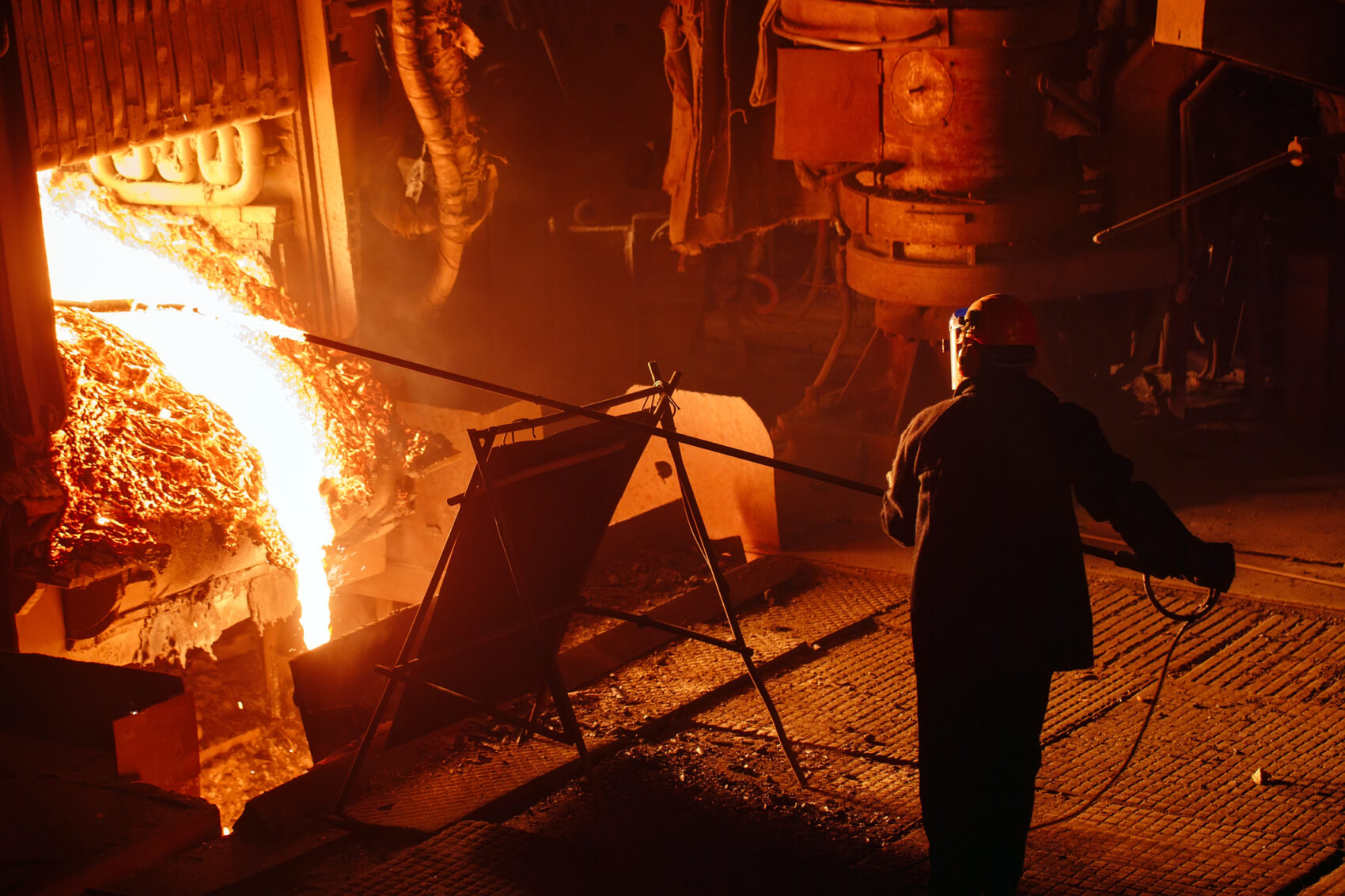
Steel’s emissions profile is largely driven by the use of coal in blast furnaces. In these furnaces, iron ore is reduced to molten iron at 1,500°C as gases from heated coal — carbon monoxide and hydrogen — strip oxygen from iron oxides. The pure iron is then transferred to a basic oxygen furnace, where impurities are removed, carbon content is adjusted, and alloying agents are introduced to produce specific steel types and grades.
Integrated blast furnace-basic oxygen furnace (BF-BOF) facilities account for roughly 70 percent of global crude steel production. Generating roughly two tons of carbon dioxide for every ton of steel, BF-BOF facilities are twice as efficient at producing carbon dioxide as they are at creating steel products. They are also responsible for considerable water, soil, and localized air pollution that negatively affects the health and livelihoods of neighboring communities.
To reduce the negative impacts steelmaking has on society, coal must be eliminated from the production process. While some commercial technologies exist that reduce coal reliance, innovation is needed to overcome scaling barriers and meet the growing global demand for steel products.
Today’s commercial alternatives
Direct reduced iron (DRI): DRI technology offers an alternative to coal-based steelmaking by leveraging gaseous reductants, the most common of which is reformed natural gas. When paired with electric arc furnaces (EAFs) to complete the steelmaking process, this method can reduce emissions by about 40 percent compared to BF-BOF production. If the EAF is powered with renewable electricity, that reduction extends further. In the Middle East and North America, where natural gas is cheap and abundant, the DRI method is used for 93 percent and 33 percent of iron production, respectively. India leads the world in DRI production, with 55 million metric tons produced in 2024, but it largely uses gasified coal and other reducing agents that offer little in terms of emissions reduction compared to the BF-BOF pathway.
Hydrogen-DRI (H2-DRI): While DRIs and EAFs have been commercially operated for more than 50 years and will continue to play a critical role in the steel sector’s future, H2-DRI is the only net-zero emissions commercial production technology available today. By swapping out gasified coal or natural gas in the DRI feed for 100 percent renewably produced hydrogen, a steelmaker can eliminate all direct emissions from the critical reduction step.H2-DRI production has been validated at pilot and demonstration scale by both major DRI equipment manufacturers (Midrex and Energiron) and by several commercial steelmakers. In the last ten years, five multinational steel companies across Europe and the United States made commitments to construct H2-DRI facilities. As of today, only one of those commitments has translated into a commercial-scale project (Stegra). This is primarily due to the high cost and limited access to the large volumes of hydrogen required, as well as the financial health of some of the largest EU and US steel manufacturers. While in the short term, US and EU companies have retreated from their H2-DRI commitments, projects in China, Africa, Southeast Asia, and Australia remain on track, leading the charge for H2-DRI’s commercial future.
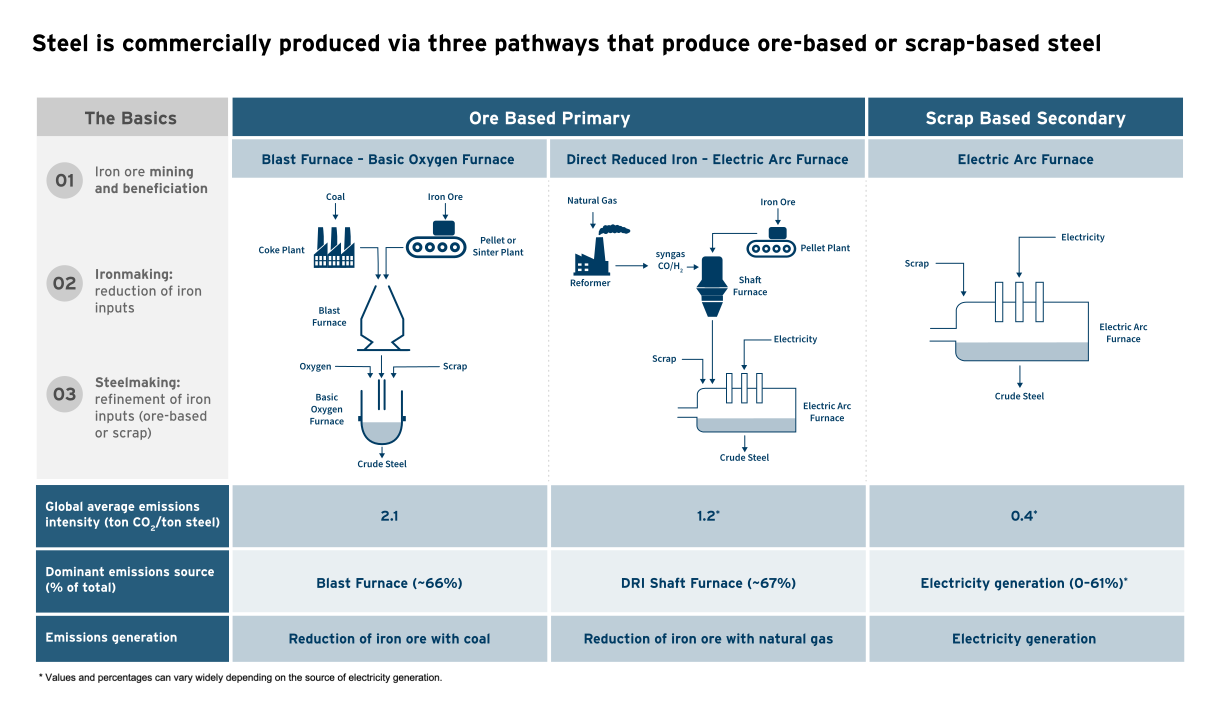
Scrap and secondary production: Both BF-BOF and DRI-EAF production processes produce steel from raw iron ore; this is considered primary steel production. Secondary, or scrap-based, production offers another pathway for low-emissions steelmaking. Recycling markets differ by region, driven mainly by domestic scrap supply. Steel products have lifetimes of 10 to 30 years across most major end-use sectors (e.g., construction, automotive, machinery), meaning scrap markets take decades to mature. In the coming decade, India and China will have a new opportunity to capitalize on massive domestic scrap supply and potentially become scrap exporters as their infrastructure and various steel products reach end of life.
Maximizing secondary steel production with EAFs is a critical element of steel sector decarbonization. Steelmakers naturally flock to secondary production as they can reduce capital and operating expenses compared to primary alternatives. The remaining challenge for secondary steelmaking is sourcing clean firm power. EAFs are only as clean as their electricity supply, and their thermal requirements are not compatible with variable wind and solar resources without energy storage or supplemental balancing.
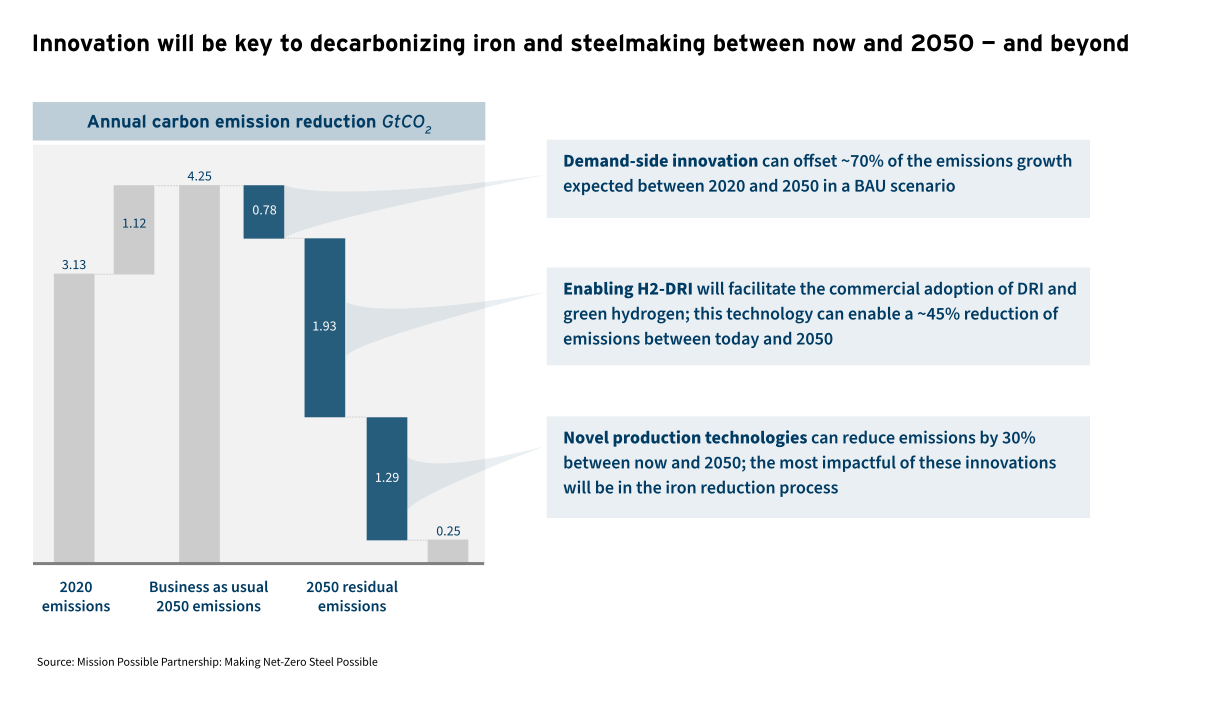
Access to cost-competitive clean firm power, access to clean hydrogen, electrified high-temperature heating solutions, and iron ore quality concerns are slowing the decarbonization of DRI and EAF technologies. Some innovators are actively working on creative solutions to these challenges. Others are exploring novel iron and steel production methods that avoid these challenges altogether. Modeling conducted by the Mission Possible Partnership indicates that novel production methods could represent 30 percent of global iron and steel emissions reduction by 2050. These supply-side innovations paired with demand-side strategies will help carry the steel sector towards a resilient future.
Today’s steel innovation landscape
Reaching net-zero emissions in the steel sector requires innovation across the value chain. This year, Third Derivative and RMI launched two industrial initiatives: the Industrial Innovation Cohorts (IIC), focused on supporting groundbreaking startups in the cement, steel, and chemicals sectors, and the Future Industries Partnership, which builds on the foundations of IIC with a specific focus on deploying solutions in Asia and the Middle East, where industrial growth and rapid urbanization are driving urgent demand for scalable, low carbon technologies. Through the process of developing robust technical investment theses, the Third Derivative team categorized three types of innovation that are needed to reach net-zero emissions across heavy industry:
- Make Less: Innovations to reduce demand for virgin feedstocks through materials substitution, recycling, upcycling, and increasing efficiency in supply chains and material use — in addition to non-technology efforts like reducing overconsumption and overproduction.
- Make Better: Reducing emissions in existing processes through direct electrification, materials feedstock innovations, and process efficiency.
- Make New: Disruptive technologies and novel processes to fundamentally change how materials are produced, with low or zero emissions from the start.
Make Less: Circularity, alternative materials, and design efficiency
Recycling, alternative materials, and maximizing design efficiency innovations will all contribute to future demand reduction for steel products, but each comes with scaling obstacles, geographic variation, and differing degrees of climate impact potential.
Recycling: Achieving emissions reductions via scrap recycling requires maximizing the amount of steel that can be reclaimed. Today’s global scrap market is efficient but leaves room for improvement. In mature markets like the United States, up to 90 percent of all steel scrap is recycled back into production. In rapidly scaling steel production economies like China and India, this percentage is much lower, as many steel products have yet to reach their end of life and robust recovery systems have yet to be established.
The intriguing steel recycling innovations of today are those that leverage traditionally discarded waste or improve process efficiency. Steel scrap is valued in the market based on its cleanliness and quality; cleaner and more homogeneous scrap can facilitate the production of higher-value products. Many of the scrap streams that are currently not reclaimed are highly contaminated or difficult to isolate from other metals like copper and tin, which can negatively affect steelmaking. Innovators like Sun Metalon and Purified Metals Company are creating value from contaminated waste streams by removing contaminants and producing uniform briquettes that improve steelmaking efficiency in the EAF.
Companies like Sortera and Metcycle are pairing AI with advanced optical sensor technology to help scrap aggregators improve sorting yields, reduce the need for manual inspection, and improve easy access for customers. These types of innovations have global market potential and represent good bets for investors looking for giga-scaling potential, but compared to others in the sector offer limited climate impact upside with existing processes largely capable of maximizing scrap reuse.
Alternative materials and design efficiency: Finding ways to use less steel, either through design or by material substitution, helps avoid not only production emissions but also localized pollution affecting fenceline communities. The construction sector, the largest of steel’s end-use sectors, is currently leading the way in utilizing innovative materials and design practices. Bio-based and synthetic materials are being leveraged not only for their carbon reduction impact but also for their improved material properties. Strong by Form and Okom Wrks are showcasing the unique capabilities of wood and mycelium-based construction materials. For all biomaterials, conscious sourcing practices and accurate carbon accounting are essential. Regulations for sourcing and accounting vary around the world, with many geographies offering little distinction between individual forests. With increased scrutiny and standardized regulation likely, innovators that have developed rigorous carbon accounting and supply chain mapping are more attractive bets for investors.
On the synthetic side, Dexmat’s advanced carbon material, Galvorn, is already replacing copper signal wire in automotive and aerospace applications. With scale, Galvorn has the opportunity to replace steel transmission wires and structural cables as a drop-in carbon negative material. Companies are also improving steel product longevity with specialty coatings (Allium), developing strategies for direct reuse of steel components, improving concrete reinforcement techniques (FSC Tech), and creating life-cycle analysis repositories to help architects and designers make climate-aligned design choices. The success of many alternative materials and design techniques relies heavily on achieving cost parity and acquiring material testing certifications. The willingness to pay green premiums in the construction sector is currently very small, forcing innovators to either achieve parity or offer considerable material property benefits. If innovators can demonstrate sales progress by achieving these milestones, their emissions reductions potential and market potential are immense.
Make Better: Improving existing processes
Commercial steel production assets are capital intensive and often operated for 40 years or more. Identifying solutions that remove emissions now, avoid coal lock-in, and can assist with market transition towards DRI-based production are critical.
Improving BF-BOF: Today, there are no innovation pathways for net-zero blast furnace production, thus retrofit solutions at BF-BOF facilities must be low-capital to avoid locking in coal-based production. Transitioning gas burners to electrified heating solutions, replacing coke with consciously sourced, renewable bio-materials, and other forms of fuel switching can reduce emissions without contributing to lock-in. These types of BF-BOF solutions are particularly viable in China, where 68 percent of global blast furnace capacity has been deployed since 2001. Drop-in and low-disruption retrofits have a significant advantage over options requiring significant facility downtime, where shutting down a line could cost millions per minute.
Improving and expanding DRI: Several upstream innovations are needed to increase market adoption and the decarbonization impact of DRI assets. Global DRI production has increased each of the last five years, from 106 million metric tons in 2020 to 144 million metric tons in 2024. For this trend to continue and accelerate, access to high quality direct reduction pellets (DR-pellets) must increase. DR-pellets are higher in iron content than the BF-BOF alternatives and can be challenging to produce from low-grade ore bodies. Australia, the world’s largest iron ore mining country and responsible for roughly 38 percent of global production in 2023, in particular struggles with DR-pellet production of its hematite geothite ores due to high phosphorus concentrations. While there is significant market potential, innovation is still needed in ore beneficiation and pelletizing that can upgrade Australia’s existing ore to DR quality.
In addition to expanding DR pellet supply, innovations at iron ore mine sites and pelletizing plants are also essential for removing emissions from upstream processes. These include electrified solutions for pellet induration, hydrogen-fueled or electrified trucks to move mine material, and novel techniques for pellet agglomeration like those developed by Binding Solutions, leveraging new binder chemistries to reduce process energy demand.
Decarbonizing global DRI production is contingent on large volumes of hydrogen supply. So long as clean hydrogen remains expensive, any efforts to reduce facility-level hydrogen demand will help reduce operational costs and expedite deployment. Electrolytic gas looping technology, such as that developed by Helix Carbon, can reduce hydrogen demand by recycling traditional waste gases and feeding them back into the DRI.
Make New: Challenging assumptions and pushing boundaries
Throughout steel’s history, furnace innovations that have increased worker safety, reduced pollution, and boosted profits have been rapidly adopted worldwide. Novel iron reduction or steelmaking technologies that make meaningful improvements in these categories have enormous market potential: capturing just 1 percent of the global market is a $15 billion opportunity. The following innovators all offer near-zero emissions production pathways, but they are also addressing various supply chain and deployment challenges:
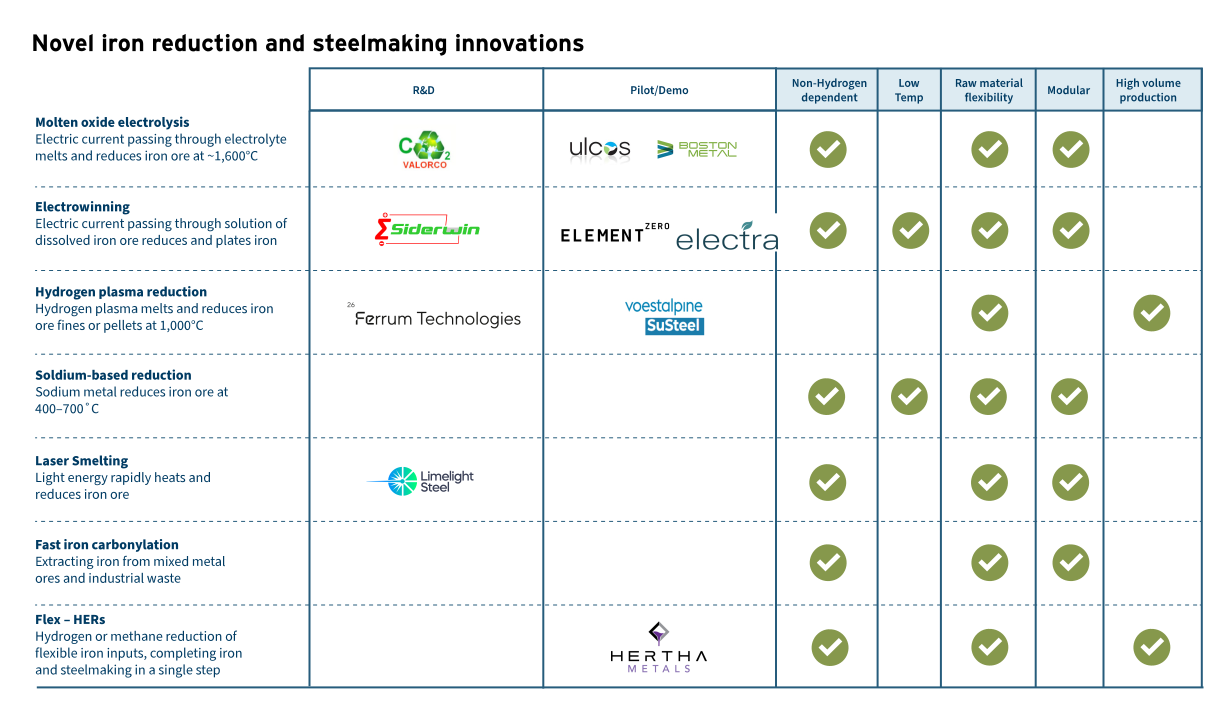
Low-temperature reduction: Low-temperature solutions for iron reduction are particularly impactful because they can be more easily paired with variable renewable energy sources. Cycling thermal systems on and off can lead to energy losses and increased costs for operators, but these effects are mitigated at lower temperatures. Helios, Electra, and Element Zero have designed systems that function below 350°C, allowing operators to mirror production profiles with low-cost renewable energy when the sun is shining and the wind is blowing.
Raw material flexibility: With the DR-pellet market currently constrained, novel iron reduction innovators are designing their systems to be compatible with a wide range of iron ore inputs. All of the companies listed in the above figure are designing furnaces compatible with iron ore inputs well below the current industry average quality of 62 percent iron (BF-BOF pellets), with some extending their compatibility down to about 30 percent iron. In doing so, innovators are avoiding current supply chain constraints but also reducing operating costs by paying less for raw materials.
Modularity and high-volume production: The innovators listed in the above figure are pursuing either modular or high-volume systems; each pathway offers a unique set of challenges and opportunities. Helios, for example, is pursuing modular furnace units with production capacity close to 50,000 metric tons per year. Roughly 50 times smaller than the average commercial DRI facility, Helios will be able to explore a variety of new deployment strategies by co-locating with renewable energy resources, shipping and transportation hubs, customers, and iron ore mining operations. Smaller units also mean reduced capex and the potential for expedited deployment. Large capital investment will be required for companies like Helios to expand their furnace manufacturing capacity, unless this step is outsourced to existing furnace manufacturers, which could limit future profit margins but can derisk and expedite scale-up.
Pairing disaggregated production with changing raw materials and supply chains is a trend the steel industry has already shown an appetite for. In the United States, and other regions with strong domestic scrap supply, standalone EAF facilities or “mini mills” have become the preferred method of production. Reducing capex and improving supply chain logistics by siting EAFs near scrap aggregation centers are some demonstrated advantages of disaggregated production.
Hertha Metals and Ferrum Technologies are approaching the market differently, with an eye for million metric ton scale production. By matching production volumes from existing facilities, these innovators are well positioned to plug into existing supply chain dynamics for iron ore sourcing, sales contracting, and downstream processing infrastructure. This makes them some of the most likely candidates to replace BF-BOFs on their existing footprints. Asset conversion at existing steelmaking sites can help drastically reduce permitting and siting timelines during project development, as well as reduce capex by leveraging casting, rolling, and various other downstream operations already onsite.
Emerging innovation insights
Through the process of sourcing, conducting diligence on, and working with startups, Third Derivative has identified some emerging insights that highlight opportunities for investors and innovators to accelerate deployment and foster impactful change.
Strategic investor-offtakers are needed in high demand growth markets: Today, there is a geographic misalignment between where the most promising technologies are being developed and the primary growth markets expected for steel across Asia and Africa. Innovations in the United States and Europe backed by domestic private and corporate venture capital are missing the opportunity to gain market exposure and valuable insights from these critical growing demand centers. Injecting capital is only one function of investors; their networking capacity and understanding of regionally specific market dynamics and politics are critical to scaling startups. Geographically diverse investor pools with a mix of financial and strategic investors can help startups expand into high opportunity regions. As Stegra highlighted with their fundraising strategy, arguably the best investor is one that doubles as a customer. By guaranteeing offtake and contributing capital, the dual investor-offtaker can reduce overall risk by enabling pilot demonstrations, lending technology and project development expertise, and attracting follow-on investment. Creating this type of dynamic is only possible if innovators are engaged in the markets where demand is strong and capital is ready to be deployed.
Modular furnace technologies can facilitate clean energy growth in steel demand regions: In Southeast Asia and Africa, two of the largest demand growth regions, energy infrastructure is largely still being developed, with fuel imported from elsewhere in some cases. These geographies are also currently reliant on steel imports with very little local production. Fortunately, these geographies also have excellent renewable profiles for wind and solar. Pairing modular furnaces with distributed renewable energy sources presents an opportunity for these innovators to scale quickly in energy economies less capable of developing existing commercial technologies. Localizing production can also help grow local labor markets, increase economic resiliency by reducing import reliance, and help expand energy infrastructure by acting as productive-use load centers.
Generating early revenue from high-margin, low-volume products can accelerate the path to commercial scale: Heavy industry has historically been synonymous with capital intensity, and even smaller-scale or retrofit innovations will need considerable capital to reach commercialization. By generating early revenue or signing advanced offtake contracts that guarantee future revenue, startups can reduce both the amount of capital needed and the inflationary cost of perceived risk.
For startup commodity producers, it is nearly impossible to compete with the incumbents on price before reaching commercial scale. Instead of relying on a green premium or subsidy support, Hertha Metals, Boston Metal, and Electra are diversifying production to target markets where they can reach cost parity early in their development. Hertha Metals and Electra are both targeting high-purity iron (HPI) sales from production at their demonstration facilities. HPI is a product used in various medical and magnet applications and typically sells for much higher prices than DRI and other commodity iron products. Additionally, HPI customers typically purchase kilograms of the material rather than hundreds of thousands or millions of tons, meaning startups can generate meaningful revenue with smaller production volumes and match existing supply chain logistics.
Boston Metal is pursuing a similar model, targeting higher value critical metal sales instead of commodity iron sales from its facility in Brazil. Initially producing higher-value products allows these companies to secure future offtake contracts, reduce capital requirements, and derisk financing without fully investing in new markets or additional research and development.
Valorizing waste streams can reduce environmental pollution and accelerate commercial traction: Companies like GreenOre, Reclinker, Sun Metalon, and Boston Metal are reducing emissions from steel, cement, and critical metals manufacturing by monetizing existing waste streams. Slag produced from steelmaking operations contains numerous toxic chemicals, and most steel companies hire third-party slag processors to manage it; GreenOre uses steel slag as an input into their carburization process that combines it with captured carbon dioxide to create supplementary cementitious materials for use in cement production. Reclinker uses recovered cement paste from construction waste to partially displace virgin lime as the flux inside EAFs, utilizing existing steelmaking infrastructure to produce a recycled clinker for cement that meets the same standards for traditional cement. Sun Metalon converts contaminated steel scrap from machining processes into steelmaking raw materials. Boston Metal is processing critical metals found in mining waste stockpiles that would otherwise simply be discarded.
All four have identified raw materials that are either operational costs or nuisances to incumbent operators. Offering a waste management solution and potential revenue stream to incumbents is extremely attractive and has helped these companies get pilots, investments, and partnership opportunities. Solving logistical challenges for incumbents in addition to reducing emissions provides a stronger value proposition that is more likely to result in commercial traction.
The centuries-old steel industry will not reach net-zero overnight. It will require innovations across the existing asset base, demand reduction initiatives, and novel production methods. Incumbent partnerships will be critical to bolster developing supply chains and validate new materials and technologies. An intentional ecosystem of startups, corporates, and investors can work together to reimagine this material that is critical to infrastructure, buildings, and vehicles around the world and forge a safe and resilient future for all.
Accelerating the Future of Iron and Steel Together
Momentum is building in the steel sector, and Third Derivative and RMI are supporting a curated pipeline of startups tackling some of the toughest climate challenges. Now is the moment to engage by investing capital, sharing expertise, or forming partnerships that bring these solutions to market. If you are interested in joining Third Derivative’s network of investors, mentors, and corporate partners to help advance industrial innovation, we welcome you to reach out here.
Acknowledgements: The authors wish to thank The Lemelson Foundation, HSBC, and ArcelorMittal for their generous support of Third Derivative & their partnership in supporting startups decarbonizing heavy industry. Learn more about the Industrial Innovation Cohorts and Future Industries Partnership on our website.